
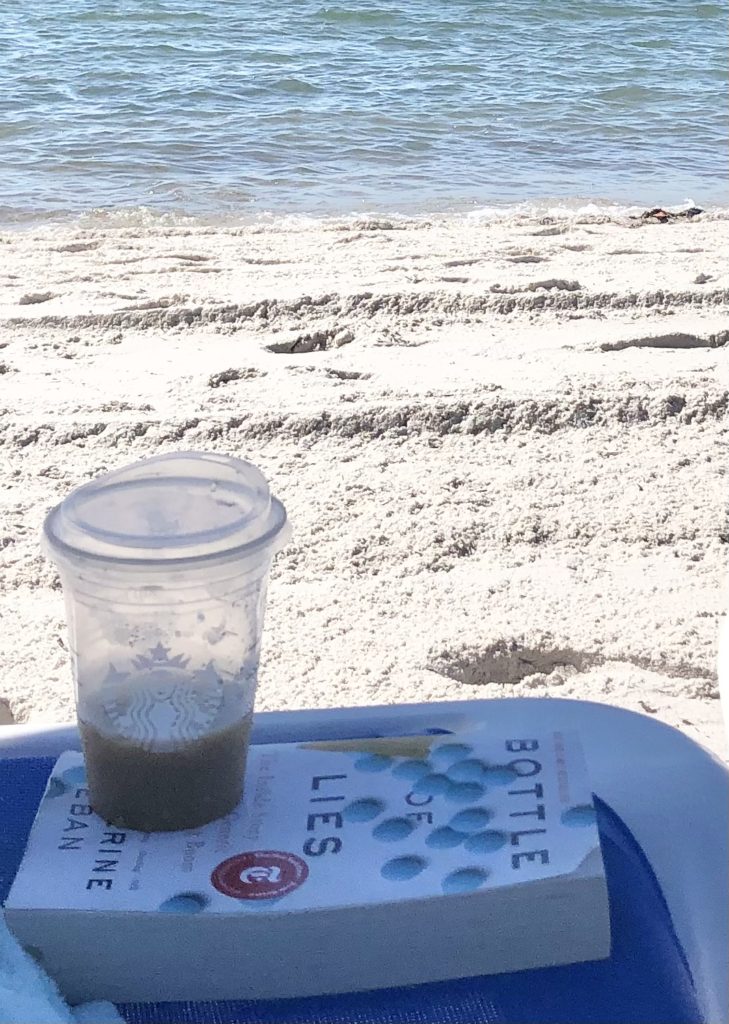
While on our most recent trip I started reading a New York Times Bestseller that had been on my reading list for a while, Bottle of Lies, The Inside Story of the Generic Drug Boom by Katherine Eban. You GUYS! This book was intense and more than I expected. The way Katherine investigated and wrote out the narrative is second to none. I would recommend it to anyone working in healthcare (especially pharmacists!) and anyone working in healthcare legislation.
Drug cost continues to be a hot topic of conversation and legislation. The generic drug boom has been one of the most important public-health advances to aid in lowering drug costs. We are taught that the FDA reviews an ANDA to ensure the generic has proven itself with bioequivalence studies. However, most of the generics are manufactured overseas which created a level of difficulty with conducting FDA inspections. This is the story of whistleblowers and regulators exposing fraud, falsified data and unsafe manufacturing practices that don’t meet the GMP standards. It tells the challenges of the FDA to keep up with a boom of manufacturing plants across middle America, China, India, Africa and Brazil.
It will leave you asking are the savings worth the risks. What have we done in the interim to close off the loopholes that allowed subpar conditions and falsified data?
I have gained an understanding for patients who feel concerned about trying a generic or distrust generics. I think I will be able to better counsel patients who have concerns about having a poor reaction to a generic or reduced efficacy with a generic. I think generics have several benefits to our markets. I plan to continue recommending generic drugs; however, I plan to be more empathetic and proactive to a patient who reports a concern with their generic. They can offer a more cost-effective product and reduce overall healthcare costs, which is desperately needed.
The ANDA Process
An ANDA (abbreviated new drug application) is submitted to the FDA for review and approval of a new generic product. The generic product must be comparable to the brand product in dose form, strength, route of administration, quality, bioavailability and indication for use. If the ANDA is acceptable and complete then the next steps include a bioavailability review, chemistry review, request for plant inspection, and labeling review. After approved, an applicant may manufacture and market the generic product. The application is considered abbreviated because the FDA does not typically require clinical testing to establish safety and efficacy since that was already established by the data the brand name drug submitted within their NDA (new drug application).