I’m still a practicing pharmacist. I’ve made a career change and I’m feeling less stress and more joy. I no longer operate in a role that requires me to stay in the regulatory, accreditation and legal loop like I had been. In some ways I loved it and miss it but in a lot of ways it has been a breath of fresh air!
I was burnt out. I had worked for a company that did no value their employees. No more. No more making sure I click a mouse enough to be a “good” employee – regardless if I’m reading a clinical study or participating in a meeting. click. click.
No more being asked to check in on my pharmacists for being in “restroom” code for too long – don’t worry I didn’t do that even when asked. I trust that my fellow doctorate degree employees know when they need to use the bathroom. For reals.
No more denied vacations and denied PTO for my kid’s events! No more auditing. No more “this call is recorded for quality assurance purposes”.
More joy. More real, authentic patient interactions and connections. More flexibility to be a working wife and mom. More time for my own health journey. I’m home for dinner every night. I can pick my kids up and attend their practices and games. I can take little breaks to be a kids Uber driver as needed.
Sometimes we don’t realize how unhealthy and toxic something is until we are on the other side of it.
But I’m back baby. I’m back as the best version of ME. My site will now be dedicated to motivation, wellness, pharmacy and specialty pharmacy topics. Let’s heal ourselves and the practice of pharmacy.
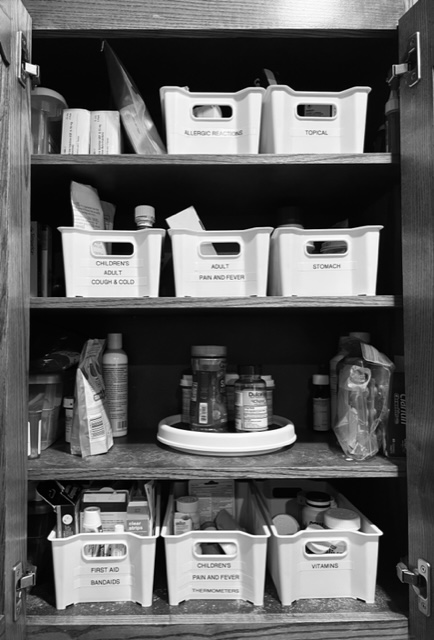
I was able to get supplies off Amazon. Local stores like Walmart or Target are likely have similar options.
I decided on my bin categories and then made labels for each bin. The bins I purchased are 10 inches long, 6 inches wide and 4 inches high. I use our lazy susan spinner for quick access to medications or vitamins that our family uses every day. I have the single version. I love the double decker version and would get it if I had enough medications or high enough cabinets!
I chose categories based on our family’s needs after looking through what we keep on hand. These should be specific to your family. We have food allergies and seasonal allergies so I keep extra allergy medication on hand. We also have a kiddo that we have to watch closely to prevent constipation so we keep several of those remedies on hand also. Think about what ailments or conditions you are commonly treating for your family and include those!
This is a cabinet in our kitchen. It is not recommended to store medications in a bathroom cabinet due to the higher temperatures and humidity in bathrooms. Ours is in a corner cabinet that goes deep to the side. I keep extra things like our pill boxes, oral syringes, oral dosing cups, etc. on the inside portion that isn’t seen.
Categories:
First Aid, Bandaids
Variety of Bandaids types (waterproof, clear strips, fabric strips, etc.) and sizes
I also keep prescription PRNs like ondansetron in here.
Allergic Reactions/Allergies
Children’s loratadine
Children’s cetirizine
Extra Epipens (we have a food allergy kiddo)
Adult Benadryl
Adult loratadine
Children’s Flonase Sensimist
Adult Flonase Sensimist
Topicals
Hydrocortisone ointment, Compound W wart foot pads, Compund W wart Freeze Off
Each family member has a weekly pill box for traveling. I use my label maker and put a name label on the backside of each pill box. I bought my weekly pill boxes at Walmart but Amazon has similar ones available.
We also keep our pet medications in the same cabinet but off to the side. He also has a pill organizer for when he boards while we are on vacation. His is a larger version because some of his chew tablets are big. Old doggo has some arthritis and allergies too. And his pill pockets. Doggo loves his pill pockets!
A compound is a custom medication created by the pharmacist from base ingredients for a patient.
What are the benefits to compounding?
Dose can be adjusted or customized instead of choosing the closest commercially available dose. Can create the perfect dose for a patient based on their needs, height, weight, gender, age, etc. This may reduce side effects while getting the most efficacious dose.
Commercially available medications may be made into a different dose form. Different dose forms may include tablets, capsules, ointments, creams, lozenges, oral liquid, powder, etc. Changing the dose form or route may reduce side effects or improve compliance.
May be able to create more palatable dose forms for young children and pets!
When may a pharmacy compound?
•The quantity being prepared is reasonable for filling existing prescriptions or anticipated prescriptions based on prescribing habits of local prescribers and/or prescriptions already on file
•The compounded products are not being sold to other pharmacies or third parties like a physician’s office
•The compounded product is not a compounded version of an FDA-approved drug. An exception is made if there is a shortage or no supply of a commercially available product and there is a medical need for the product.
•The ingredients used meet the official standards found in USP/NP, are a component of an already FDA-approved drug or are on a list of approved substances developed by the Secretary of the U.S. Department of Health and Human Services
•The pharmacy does not actively promote or advertise their compounding capabilities to solicit business
•The pharmacy does not compound a drug that has been withdrawn or removed from the market because they were unsafe or ineffective
•The pharmacy limits their interstate distribution of compounded products to not more than 5% of the total prescriptions filled at the pharmacy
Check us out on Teachable, MPJE study courses for Iowa, Maryland, Texas and Federal Law.
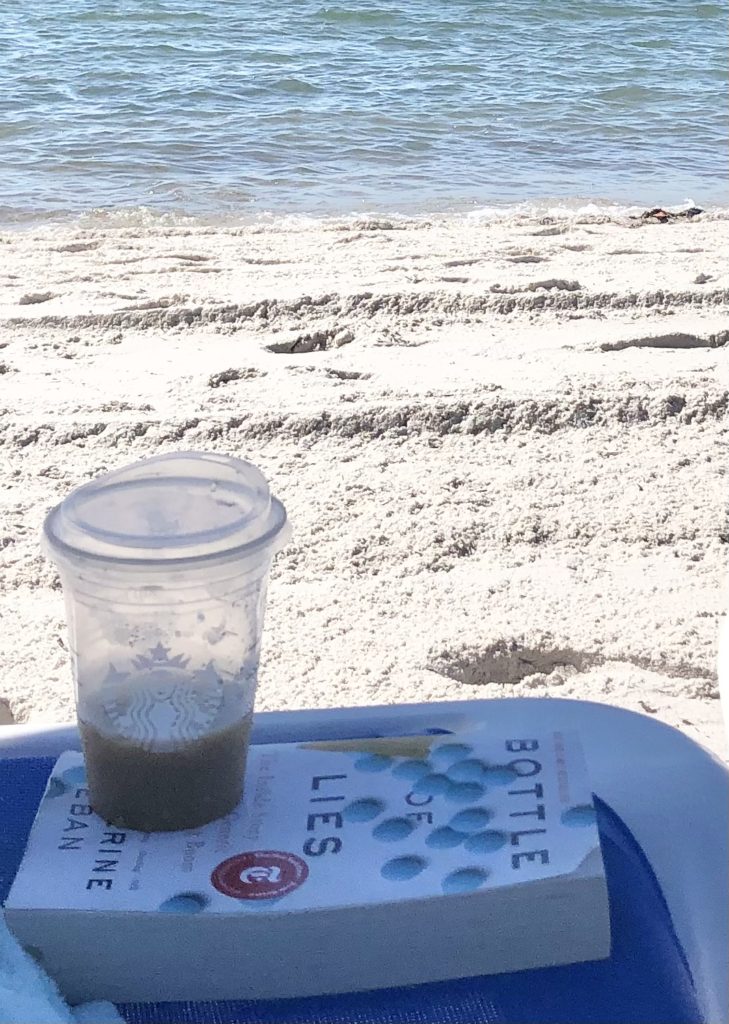
While on our most recent trip I started reading a New York Times Bestseller that had been on my reading list for a while, Bottle of Lies, The Inside Story of the Generic Drug Boom by Katherine Eban. You GUYS! This book was intense and more than I expected. The way Katherine investigated and wrote out the narrative is second to none. I would recommend it to anyone working in healthcare (especially pharmacists!) and anyone working in healthcare legislation.
Drug cost continues to be a hot topic of conversation and legislation. The generic drug boom has been one of the most important public-health advances to aid in lowering drug costs. We are taught that the FDA reviews an ANDA to ensure the generic has proven itself with bioequivalence studies. However, most of the generics are manufactured overseas which created a level of difficulty with conducting FDA inspections. This is the story of whistleblowers and regulators exposing fraud, falsified data and unsafe manufacturing practices that don’t meet the GMP standards. It tells the challenges of the FDA to keep up with a boom of manufacturing plants across middle America, China, India, Africa and Brazil.
It will leave you asking are the savings worth the risks. What have we done in the interim to close off the loopholes that allowed subpar conditions and falsified data?
I have gained an understanding for patients who feel concerned about trying a generic or distrust generics. I think I will be able to better counsel patients who have concerns about having a poor reaction to a generic or reduced efficacy with a generic. I think generics have several benefits to our markets. I plan to continue recommending generic drugs; however, I plan to be more empathetic and proactive to a patient who reports a concern with their generic. They can offer a more cost-effective product and reduce overall healthcare costs, which is desperately needed.
The ANDA Process
An ANDA (abbreviated new drug application) is submitted to the FDA for review and approval of a new generic product. The generic product must be comparable to the brand product in dose form, strength, route of administration, quality, bioavailability and indication for use. If the ANDA is acceptable and complete then the next steps include a bioavailability review, chemistry review, request for plant inspection, and labeling review. After approved, an applicant may manufacture and market the generic product. The application is considered abbreviated because the FDA does not typically require clinical testing to establish safety and efficacy since that was already established by the data the brand name drug submitted within their NDA (new drug application).
Regulations fall within the jurisdiction of the individual states.
Pharmaceutical equivalence: same active ingredient, same dosage form, same route of administration, identical in dosage strength or concentration, may contain different excipients
Therapeutic equivalence: pharmaceutical equivalence and bioequivalent
Bioequivalence | ADME
A = absorption
D = distribution
M = metabolism
E = elimination
The manufacturer must submit graphs to the FDA illustrating the two products containing the same drug have similar blood concentration vs. time curves, including:
Time to peak
Peak concentrations
Area under the curve (AUC)
References
Approved Drug Products with Therapeutic Equivalence Evaluations aka The Orange Book
The Electronic Orange Book (internet version)
United States Pharmacopeia Dispensing Information (USP/DI) Volume III plus supplements
Facts and Comparisons, Inc Approved Bioequivalence Codes
Drugs marketed before 1938 are not required to be in The Orange Book.
A Rated
Bioequivalent to the innovator’s drug product
Therapeutically equivalent to the brand name or reference product
A-rated products may be substituted for one another.
B Rated
NOT bioequivalent to the innovator’s drug product
B-rated products may not be substituted for one another.
Generally, a tablet cannot be substituted for a capsule, an ointment for a cream. Most sustained-release or controlled-release are not interchangeable.
AB Rated
Previously not considered to be bioequivalent and now organized into bioequivalence groups (AB1, AB2, AB3, etc)
Must have the same number or lack of number to be bioequivalent
Cannot substitute an AB1 product for a product designated as AB2
The Federal government has not passed regulations limiting the substitution of these products although a few states have.
Examples:
Carbamazepine
Digoxin
Levothyroxine
Lithium
Phenytoin
Theophylline
Valproic acid
Warfarin
Checkout our self-guided courses and instant download study guides on Teachable for Texas, Iowa, Maryland and federal law!
Many of us desire to use our top-notch expertise as a medication expert to help others in a way that is profitable and flexible. The world outside of work continues to demand more and more of us. There’s a big buzz about creating work/life balance. Work/life balance is having equilibrium where an individual feels they are equally prioritizing the demands of their career responsibilities and of their personal life. More and more companies are in the news offering flexible work hours, the ability to telecommute or work from home, unlimited PTO, paid maternity and paternity leave, in addition to other millennial worker requests such as competitive compensation, comfortable offices, opportunities for growth and advancement and social connections. Pharmacy doesn’t seem to be as progressive in these enhancements or modifications as other industries.
However, there are pharmacy career options that offer remote work, part-time work and/or flexible scheduling. Adding more time into the day by eliminating a commute to and from work can be life-changing. Being able to reduce hours or set your own hours can allow time for personal activities and responsibilities. These careers can be difficult to find and it can be hard to get an initial interview when an opening is available. Some may require brave steps of making your own company or creating your own career. Others may require you to continue your primary job while you begin your own side hustle start-up with hopes of it generating enough income that you can then cut back from your primary job.
Medication Therapy Management
Prescription Approval and/or Remote Order Entry
Prior Authorization Review
Drug Information
Quality Improvement
Medical writing and/or Reviewing Medical Literature
Create your own – Consulting, Pharmacogenetics, Coaching, Entrepreneurship
How do I find one of these positions?
Check out job board websites like Indeed, LinkedIn, SimplyHired and LinkUp. Download their apps and then create alerts to notify you when there is a posting that may match your ideal position. Find out what companies are hiring for positions of interest and create alerts to notify you when those companies post a new position. Review the qualifications, requirements, licenses, certifications and skills the employer is looking for and gain experience and skills in those areas.
Hire a professional to review your resume and cover letter. A candidate with experience and skills but a poor resume may not even be asked to interview. An impressive resume and cover letter are essential! There are individuals and companies that specialize in resume templates, reviews and custom writing for pharmacists. If you think yours could use some improvement check out these services. A simple google search of pharmacist resume service will bring up options. I would recommend using a service dedicated to pharmacists or healthcare professionals.
Network. Network. Network. Network virtually and in person. Places to consider are LinkedIn, local, state and national pharmacist organizations and Facebook groups of interest. A resume and profile can be created and kept up to date on LinkedIn listing experience, education, licenses, certificates, skills and accomplishments. State pharmacist organizations can be a great way to get to know other pharmacists and companies in your region. Many niche pharmacy groups have larger national organizations with committees, meetings, continuing education programs and more opportunities to get involved with pharmacists working in your area of interest all over the country. If you can, volunteer to service on a committee or help with a project. There are Facebook groups for several pharmacist and pharmacy areas of interest. Try searching a topic of interest such as MTM, consulting, etc. and pharmacist. Join any groups that seem interesting or relevant to your pursuits. There is much that can be learned from these groups and it creates a community for discussion, posting jobs, and collaboration.
Be brave, be vulnerable. Try new things, meet new people and put yourself out there.
Check out our self-guided course and instant download study guides. on Teachable for Texas MPJE, Iowa MPJE, Maryland MPJE and Federal Law Review!
My tests had several questions that referenced to the drug approval process. I suggest that anyone planning to take the MPJE for any state be familiar with the drug approval processes
First and only FDA-approved prescription cannabidiol (CBD)
What is it used for?
Seizures associated with Lennox-Gastaut syndrome (LGS), Dravet syndrome or tuberous sclerosis complex (TSC)
Mechanism of action for the reduction of seizures is unknown.
How is it dosed and taken?
Titrated dosing given orally or via feeding tube (non PVC) twice daily, administered consistently with or without food.
LGS or Dravet syndrome:
Initial dose: 5mg/kg/day (2.5mg/kg twice daily)
Recommended dosing: 10 to 15mg/kg/day (5 to 7.5mg/kg twice daily) increased in weekly increments of 5mg/kg/day (2.5mg/kg twice daily)
Maximum dosing: 20mg/kg/day (10mg/kg twice daily)
TSC:
Initial dose: 5mg/kg/day (2.5mg/kg twice daily)
Recommended dosing: 10 to 20mg/kg/day (5 to 10mg/kg twice daily) increased in weekly increments of 5mg/kg/day (2.5mg/kg twice daily)
Maximum dosing: 25mg/kg/day (12.5mg/kg twice daily)
If rapid titration is necessary, dose may be increased no more frequently than every other day.
Dose adjustment and a slower titration is recommended in patients with moderate to severe hepatic impairment.
Should not be stopped suddenly due to the risk of increased frequency of seizures and status epilepticus.
Recommended lab work:
Transaminase and bilirubin levels prior to starting treatment, at month 1, month 3 and month 6 then periodically thereafter.
Patients on valproate or are at increased risk of elevated transaminase levels and/or hepatocellular injury.
If levels are elevated, consider a dose reduction or discontinuation of Epidiolex or other medications known to increase transaminase levels such as valproate and/or clobazam.
Common side effects (> 10% and greater than placebo): transaminase elevations, somnolence, fatigue, malaise, asthenia, decreased appetite, diarrhea, vomiting, pyrexia, rash, insomnia and infections.
Other important side effects to be aware of: suicidal behavior and ideation
Potential interactions to consider:
Several potential drug-drug interactions to consider, most commonly run into potential drug-drug interactions with other anticonvulsant medications:
Clobazam, diazepam, & valproate
Recommended to counsel patient or caregiver on signs/symptoms to watch for and recommend lab work as appropriate.
Strawberry flavored but does not contain strawberry.
Compatible with a ketogenic diet.
Federal law no longer considers Epidiolex to be a controlled substance. It had originally been federally scheduled as a CV. Now it is federally non-controlled. There are a handful of states that have it scheduled as a controlled substance.
It’s a great idea to consider some other state specific controlled substance regulations. Some of these may be:
State Controlled Substance Monitoring Program
Not all states, however most states have a controlled substance monitoring program that allows prescribers and pharmacists to evaluate a patient’s prescription drug history. Each state can specify what information is reportable, how soon after dispensing it must be reported, how it is reviewed and documented, which medications are included, specific exemptions and how long records must be kept. Some states also require a zero report be filed even if a pharmacy does not dispense controlled substances.
State Specific Controlled Substances
Some states designate a medication as a controlled substance or a stricter class of controlled substance even if federal law does not. Some examples of medications to look at for this are: growth hormone, HCG, testosterone, Epidiolex (cannabidiol), Neurontin (gabapentin), Ultam (tramadol), butalbital containing products, Donnatol (phenobarbital and belladonna alkaloids), Librax (chlordiazepoxide and clinidium), ephedrine, pseudoephedrine, Soma (carisoprodol), etc.
Mid-Level Practitioners Prescribing Authority
Prescriber authority for mid-level practitioners such as nurse practitioners or physician assistants can vary state to state. Some are limited as to what controls they may prescribe, day supply allowed, what setting they may prescribe in, etc. The button below is a link to the DEA website that provides a listing by state.
Some states allow pharmacists to dispense Naloxone without a prescription under a collaborative practice agreement, statewide protocol or standing order. There are different limitations and documentation required state to state.
When taking the exam it’s important to read each question carefully and concentrate on which law, general concept or principle the question is testing.
When a drug name is given in a question, identify if it is OTC, prescription only or a controlled substance. Then, use that information to determine which laws apply and how they apply to the question at hand.
Always remember, state law may be stricter and if so STATE LAW APPLIES.
Preparations containing limited quantities of certain narcotics
Generally used for antidiarrheals, antitussives, and analgesic purposes
Examples: Cough preparations with ≤ 200mg of codeine per 100mL or 100g (Robitussin AC, Phenergan with Codeine), Lomotil, Lyrica
CIII-CV Valid Types of Prescriptions
Written signed prescription
Fax of written prescription
Erx
Verbal
Containing all information except prescriber signature
Transfer
ONE TIME for the purpose of REFILL dispensing
Pharmacies electronically sharing a real-time system may transfer up to max refills permitted by law and prescription
CIII-CIV Refills (and CV in Most States)
No more than 5 refills within a 6 month period
Must keep information on the back of the original prescription or in a computerized record-keeping system
Must be accessible within 48 hours
Must record: Prescriber name, Name and address of the patient, Quantity dispensed on each refill, Date of dispensing for each refill, Name or ID code of the dispensing pharmacist and Number of the original prescription order
CIII-CV Partial Filling
Partial filling is allowed
Each partial should be recorded in the same manner as a refill
The total quantity dispensed in all partial fillings cannot exceed the total quantity prescribed
No dispensing may occur beyond 6 months after the date Rx was written
Filling a CV Without a Prescription/Limitations
Only a pharmacist may dispense an over the counter CV
A non-pharmacist may complete the money transfer at the register
Purchaser must be ≥ 18 years old (Rph can require proof of age)
Furnish identification
Bound record book must be maintained by the pharmacist: Name and address of the purchaser, Name and quantity of the CV purchased, Date of purchase, Name or initials of pharmacist that dispensed, Records must be kept for 2 years
Not more than _______ in a 48 hourperiod to the same purchaser
240mL (8 ounces) of any controlled substance containing opium
48 dosage units of any such controlled substance containing opium
120mL (4 ounces) of any other controlled substance
24 dosage units of any other controlled substance
Therefore, MAX is 4 fluid ounces of codeine containing cough syrup over the counter to a given purchaser in a 48 hour period.